
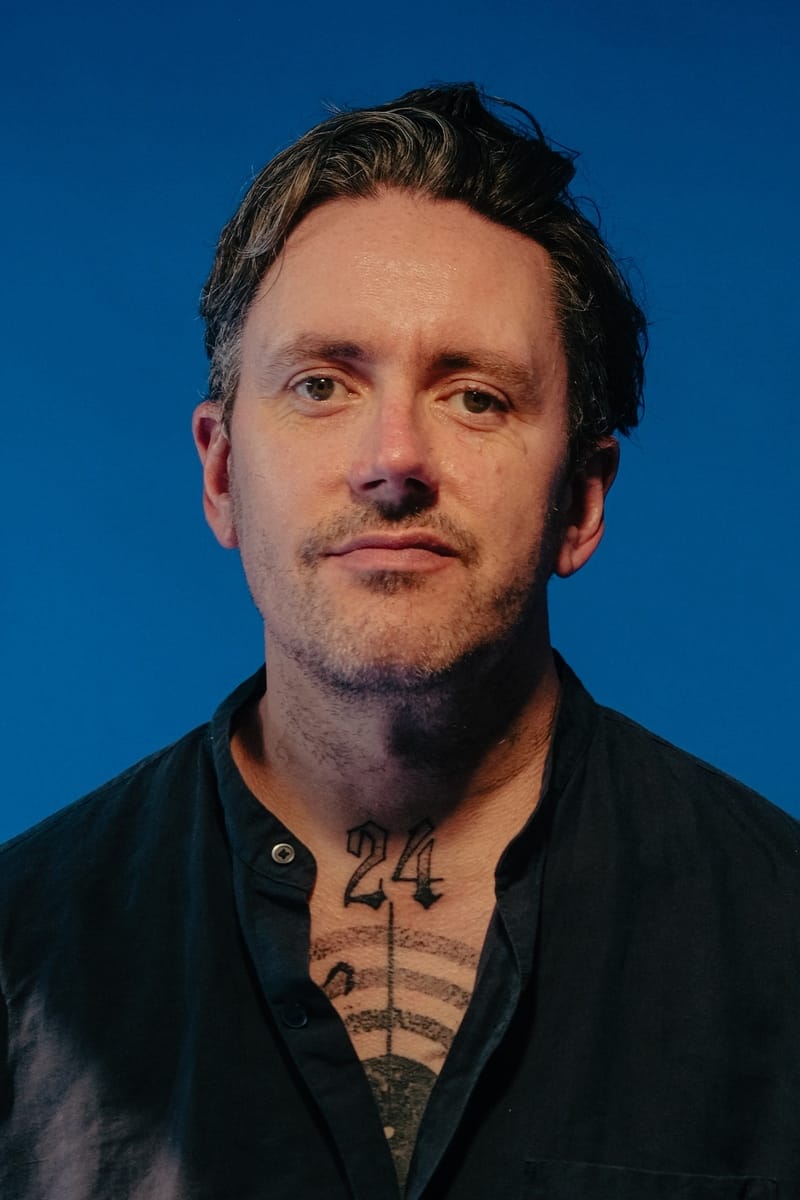

DRIP DROP. With the Founders 🤝
Monday 27th April, DRIP DROP launch day. An interview with Kayla Medica & Gaz Williams, co curators

DRIP
Kayla Medica:
OK. My first question for you is what is the first item that you coveted that you can remember?
Gaz Williams:
I would say…the first thing that really was like pride, or the joy of collecting was when my parents bought me the replica Talkboy from Home Alone 2. That movie landed right when I was 10. So, I'm showing how ancient I am here, but it was peak pop culture and why I loved it so much is it actually had utility. I could record on it. I could do exactly what it did in the movie and I could be playful with it and use it in interesting ways, you know, fuck around with my parents or friends and whatnot and use it to exactly what it did in the movie.

Talkboy, and some OG GROUP GROUP stickers c/o Gaz
And so that to me is the first thing I can recall and ironically I've always kept that experience in mind and then baked that into even being the leading artwork for my (forthcoming) podcast Cheque Check.
How about yours?
Kayla Medica:
So I'm the youngest of three girls, and when I was a kid obviously my older siblings got cool stuff and I always wanted it and the first thing I can remember being really jealous of is my sister got the Aqua Barbie Girl CD and I really wanted it.
Gaz Williams:
That is awesome. That is so awesome.
Kayla Medica:
So, since your Home Alone Talk boy, how has your relationship with things evolved into this merch obsession?
Gaz Williams:
I have a two-sided answer: One of my favorite ever pieces of merch, which I still have is an Envato pencil. Envato, the company. A while ago, I wanted to change careers, and I was really attracted to the ethos of Envato (global, bootstrapped, large community vibes). The pencil itself - as well as having utility - represented a moment of finding my way into a new career, that being within the startup and tech scene in Melbourne and then beyond.
But on the other side, you know, I've grown incredibly tired of consistent poor standards of design within startup and tech world in terms of the merch that's sent out, lazy screen printing on Gildan tees that will disintegrate in your washing machine, it’s ultimately just waste.
And I think where I've landed on it is the startup world talks such a massive game about being this sort of higher elevated species, and yet, completely under-appreciate good design and putting something of substance out into the world. So I think I've started to look around and identify something that really sets um some brands apart, especially if it's something that has utility.
Kayla Medica:
Yeah. It's funny you say your favorite merch is a pencil cuz one of my favorite pieces of merch is a pen from an airport hotel and I have it here so I'll show you but I like it purely because of the font.

It’s disgustingly dirty, but I love it nonetheless
Gaz Williams:
Cool. Oh, that's awesome.
Kayla Medica:
I obviously got it when I stayed there, it was a disgusting hotel. The room smelt like cigarettes. This pen probably was produced in the 80s and they just have a room of them. But I don't know, it reminded me of Blade Runner. the aesthetic of it. I love this pen and I will be sad when it runs out.
Gaz Williams:
Same question/opinion on the worldview aspect?
Kayla Medica:
I think my worldview is probably the same. Surprisingly I'm probably more anti-capitalist than people realize. And therefore I hate waste and I hate just spending money on crap that people don't want or don't need, aren't going to use, they're going to throw out. If you're going to make something, make it high quality, make it stand out, make it have a purpose.
Gaz Williams:
So now, you and the team are in charge of generating merch for Generate. What type of discussions were had when thinking about what merch to create, where to source from, and what you're endeavoring to do there?
Kayla Medica:
Yeah, I think it helps that the people making the decision on the Generate merch are four very picky marketers. We have designers involved who are absolutely not putting anything that’s not well designed forward. So our tote bags were actually made by Mercha, it was selected because it had pockets, it had all these features on it. We all didn't want a giant logo printed on it. So the logo is white on a white bag. You know, it's very subtle. And that decision was great because we get compliments on it all the time. When I take it shopping, shop assistants will ask me where I got it from and it's always hard to be like, "sorry, you can't get it."
But even the water bottles, the pens, the colors that we picked, when we got the mockups back and it had like the logo on it, all four of us said, "make it smaller," which is not something you would normally hear for merch. It’s because all of us were saying “I don't I don't want to be a billboard, even for my own thing,” which is really weird, right?
We have some merch coming out this year - which I can't say too much about - the idea was floated last year and it was struck down for budgetary reasons, but it took convincing. So one person had the idea, and had to rally the three of us remaining to be on board with it. And then it went through, I think, two rounds of design before we said: "Okay, it's not cheesy." It's not wasteful. It's not all these things. And we're all happy to put our name behind it.
Gaz Williams:
Cool. Love that.
So, from an advisory perspective to give some people something to latch on to with your advice: the irony is that we advocate for good design, or giving a shit and generating good merch, but we operate in a bit of a cash constrained industry at times, right? Scrappy startups who don't have much money. Going to a conference soon, I need some merch… decide to print up some logo whipped up in Canva and just printed on there with whatever 24-hour shop will do it. Thinking outside the box there, what would you recommend for people to take this seriously to differentiate themselves?
Kayla Medica:
OK, first of all, I have a controversial take that I think company t-shirts are sexist because very often if you have a logo go across the front, it draws attention to a woman's chest which they don't always want. Most t-shirts are cut for male bodies and they're not very flattering on women.
Most women don't wear a lot of t-shirts. It's not very common for us, and especially in a workplace setting. I think men can get away with a t-shirt that's smart casual but a woman in a t-shirt is not very smart casual unless it's like a tailored shirt.
So a cheap screen printed shirt, most women are not going to wear and they're not going to like it if you force them to wear it at a conference. So that's my take on that.
Go buy a really nice sunscreen and put a sticker on it. Instead of spending $20 on a t-shirt. It just has to be something with utility, not another notebook, not another water bottle.
Gaz Williams:
Yeah, something with utility. Ironically for anyone reading this, I actually don't have any of those coffee reusable coffee cups anymore. Ironically, they've all been lost to the sands of time. So, I might turn my nose up at certain things, but every now and again, you need to refill what you've lost!
Kayla Medica:
I don't drink hot drinks very often. I always prefer iced drinks. So, whenever I get the coffee mug thing I’m like… "Right, I'm not going to use that.” You can have all of mine!
Gaz Williams:
So in regards to this, I've thought this over the years. Full galaxy brain style. But I had no outlet to talk about merch. I would just put out a LinkedIn post every now and again. But now that we’re doing DRIP DROP, I’ve got the perfect vessel for my opinions on this.
So I always had this thought on this narrative that's been created throughout startups - especially bro culture - over a number of years, which has been this “oh um I just wear the same thing every day so I don't need to think about this.” “I have too many things to decide upon already.”
That decision fatigue has been sort of held up as a stamp of excellence, usually amongst dudes, and I reject that completely. Because in my opinion, which is subjective, when I see someone that's put real goodness into their merch and how they represent their brand out there in public, I take it the other way and I say: “here's someone who is thinking about their company and then seeking to tell a story or initiate a conversation or specifically to talk to customers current or potential, with a lot more thought.
For me, if I meet someone that has sick merch, I say “who are you? What do you do?” I want to know who you are because I want to know whether you've got top tier designers on your team, or who you're using for merch, or what decision-making process you went through to get there to ultimately spend money on it and buy into the thing.
And so I think about that a lot. That is way too much! But now I can talk about it.
To give some level of recommendation, people will feel no guilt whatsoever buying their Patagonia vest or their Carhartt jacket, and spend $350 on that. Noble cause with Patagonia and all that, I get it. But it’s largely homogenous. A trope within the industry.
I think for me, if I'm to recommend, you don't even need to print in bulk or create a massive order. You can literally just go buy a staple, a blank chore jacket, a beautiful jacket, something that looks great, sharp, and you can print on it pretty much for a third of the price of any of those mass-produced goods that sit on the racks, for a bespoke 1:1 piece.
I've got this CHEQUE CHECK jacket etc. In full disclosure it probably cost me $160 total. I designed it completely: found a clearance chore jacket and paid full price through Full Cowboy to print it and embroider it in a super hectic way. But then I rocked up to the Adelaide SOUTHSTART conference, roamed around in my merry way and got a million votes of confidence and people saying they’re looking forward to this podcast landing, and that's the best merch I've seen lately.
So I'm not trying to be pretentious or arrogant about this stuff. I just think don't overthink it from the money spent because you're spending it on other shit that you don't need over there when in reality you can just own a one-of-one and it's pretty special.

Kayla Medica:
And that item, people post photos of it, the impressions of it digitally go beyond your physical geographic limit. But if you just have a generic piece of crap merch, no one's going to be taking photos of it. No one's going to be talking about it online. No one's going to be telling their friends about it. So, it's way better to invest in one really cool thing.
Gaz Williams:
Yeah. I mean it was a throwaway comment at the time - also in Adelaide - and another SOUTHSTART. I didn't even know if what I was doing with the Tractor Ventures merch was good. You know, I had a certain taste. I produced a bunch of Letterman jackets. It's great for photos. really good at using it as part of those brand building efforts.
Probably felt most validated by Phil Morle of Main Sequence Ventures, he just rolled past me, points the finger at me and says “best merch in the game.” And I say to myself “fuck yeah, Phil.”

Tractor Ventures “Letterman” - Hobart 2022
Kayla Medica:
So, actually another great example is, you don't have to get merch made. You can spend that $20 per t-shirt budget that you had, on a $20 Lego set.
Gaz Williams:
Bang on. Yep, bang on. And I've spoken about that in your Mehdeeka publication and publicly, a lot. But Tractor Ventures generated business from that. Like, let's just say, a significant amount of pipeline.
Kayla Medica:
Okay. I have another question for you. Where do you draw the line between goods, merch, gifts, and just products?
Gaz Williams:
OK well maybe again on the Tractor scenario since it’s still quite fresh. It’s like: my team represents Tractor. Our customers can rep us in some other way. We had a podcast called Hard Mode. It was around bootstrappers and people building hard businesses. And so I made t-shirts for companies we funded, but they were branded Hard Mode. Not Tractor Ventures. That would be naff.
So the distinction there is that I view merch, it sits with the team and it's for you to rep and rep with excellence and some thought, starting with the leaders and hopefully extending down.
I would say with any giveaways, it must have utility. It must have utility. So, why would anyone feel weird about giving out a lighter, for example. Why, does it denote smoking or smoking weed or whatnot? Well, plenty of people do, by the way. Everyone needs to light a fucking birthday candle. So don't overthink it. And the gift-giving is just a big missed trick in the Australian startup/tech scene.
The Legos that we were sending out for Tractor Ventures were always intended to be a gift, but a very strategic gift because I know that people will post about it: those elements of retro, nostalgia, fun, playfulness and to differentiate the brand.

Gaz, and the infamous Lego Tractor gifts
Kayla Medica:
Yeah. For me, merch is specifically something with a logo on it. Then, you could have merch that's a colour or design or pattern or something which doesn't have a logo, but it's in the ”If You Know You Know” realm of mega fan, so you can spot it a mile away with the colour palette or something. And that’s where it kind of blurs into “goods” for me.
Gaz Williams:
Ok, last one, a vague one, but an on-the-spot-one: Good merch necessitates good design, how would you recommend getting good design done?
Kayla Medica:
I think if you're not a good designer… like I would describe myself as someone who has good taste, but I do not have design skill.
But I can mood board and curate and brief a designer quite well. And I think if you can do that, that's great. I get a lot of my inspiration from outside of my work industry. So you and I both work in tech. But we both get a lot of inspiration from musicians, from artists, I get a lot of inspo from attending markets.
I was just watching a vlog of a local Marrackville artist who visited an illustration fair in Tokyo and she was like, "Oh shit, I never thought of this!"
She was seeing stickers that were originally photos of real-world objects instead of it being a digital illustration printed as a sticker. Someone had built little clay models, taken photos of the clay model, and then cut it out and made that into a sticker.
Whereas she was originally, "Whenever I think of the word sticker, my first thought is, a vector file, a digital drawing exported as a file and that's your sticker." So yeah, looking at what other people are doing, I don't necessarily love the phrase “great artists steal” but it's not wrong.
Gaz Williams:
I think, put it this way, you know: as a sniff test, I can tell if you've lazily done something in Canva or if you've done something with a proper designer. And so for me, I would rather overindex to spend to have a designer come in and create a bit of a suite without it sitting in this big rebrand realm, for a day rate or whatever.
You and I are using Sublime for DRIP DROP inspiration which will be a massive unlock for us rather than have it sitting in email or slack, but no doubt that's something I would probably recommend.
Kayla Medica:
Yeah, I feel like there's a lot of companies who undervalue a brand guideline in terms of a design pack. You need shapes, you need textures, you need things that a designer can come in and play with logo type, patterns etc.
There’s so much more that you can do. And if you establish your brand with that kind of thing, that's when you can do the merch without a logo because you've associated your brand with whatever pack you put together. And I think when you get a good designer and you give them something like that, they come back 10 times more creative than you could have imagined they would.
Gaz Williams:
Yeah absolutely. For my blog GROUPED, I had Sydney artist Carl Whitbread design up a bunch of assets, and he nailed it, but the mood board had what he knew well already, but it was easy to visualise how it would move forward. Nine Inch Nails, HEALTH, Dark Mofo, A24, Lego… A few bits and pieces were used from that to create something organic and with grit.
I just put that in front of him and said, "Just do your thing because I'm probably going to approve it straight away." And I did. I paid him properly, and he produced exactly what I wanted and that's translated into my merch.
Kayla Medica:
Yeah, so I wrote my book and I originally was researching business book cover trends. I was like, “they're all fucking boring.” They're all one flat colour, big text, name of book, that's it. And the first thought was “this doesn't match the brand that I've built with my newsletter.” My newsletter’s mood board was the Hungry Hungry Caterpillar, Bob Ross, Sesame Street, stuff like that. What I wanted was ‘educator.’
So like I went with kids' education as the core of my brand theme. And then I was like, “well, it makes sense to continue that.” So I actually got a children's book illustrator to do the cover and promo images for it. And she painted it on mixed media, scanned it, it was painted specifically to be a book cover, so it had gaps in the right spot and things like that.
I basically wanted it to be, if it ever did get into a Dymocks or something, I wanted it to be “this book's in the wrong section.” “It doesn't belong in the business section” and they pick it up and be like, "Oh, it is a business book." But it represents me.
I think when you're self-employed, you can represent yourself and your personality as a reason to work with you. And so I'm very “what you see is what you get.” And if you like what you see, you're going to like what you get. And there's no disconnect.

DROP
GET INTO IT
Hungry for more merch content?